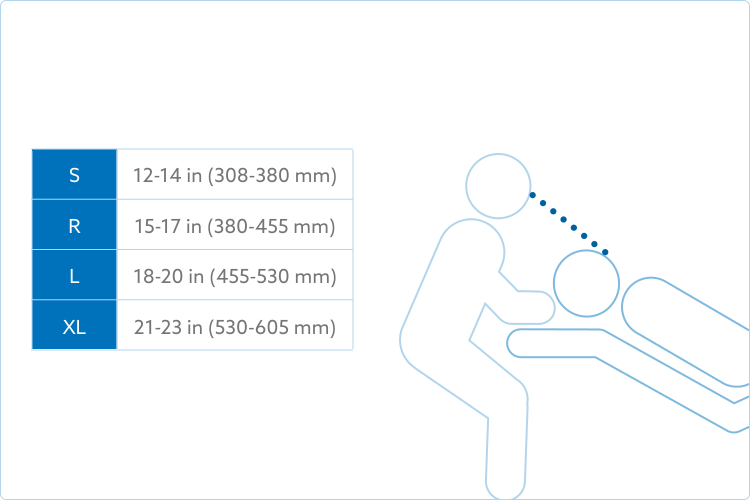
High-performance oculars can provide an extra-large depth of field (up to 120 mm).
• Short 28-38cm
• Regular 36-46cm
• Long 43-53cm
• X-Long 50-60cm
Resolution:
The ability to differentiate images that are separated by small distances and to detect fine details.
Colourmetric Shift:
Longitudinal Chromatic Aberration, also known as “LoCA” or “bokeh fringing”, occurs when different wavelengths of colour do not converge at the same point after passing through a lens. Because each colour has a different wavelength, uncorrected optics cannot focus on the different wavelengths in different points in space.
Deformation of the image:
An object that is seen with a magnifying glass that has a spherical aberration, appears bent or spheric. The lines are not straight.
This is the most common type offering magnification of 3.5x or less. The lightweight design offers good field-of-view and good depth-of-field in a short compact design.
Prismatic Lens:
Much higher magnification (up to 8x) provides the sharpest image possible, within a short depth-of-field. However, this is compensated by longer and therefore heavier lenses. These are suitable for specialists requiring great detail and clarity within a small area.
Range of Loupes
PeriOptix® Through-the-Lens Loupes
PeriOptix optics are made with high-end, shatter-resistant glass to ensure optimum edge-to-edge clarity in a large viewing field. These lightweight premium through-the-lens (TTL) loupes have extremely precise optical quality and a large field of view making them comfortable, easy to use, and carefree.
- Adjustable to all users
- Variable declination angle
- Less expensive (-15 to 20%)
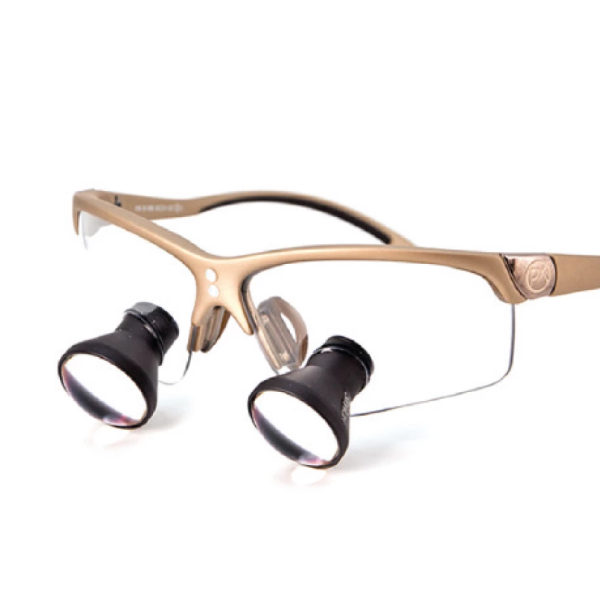
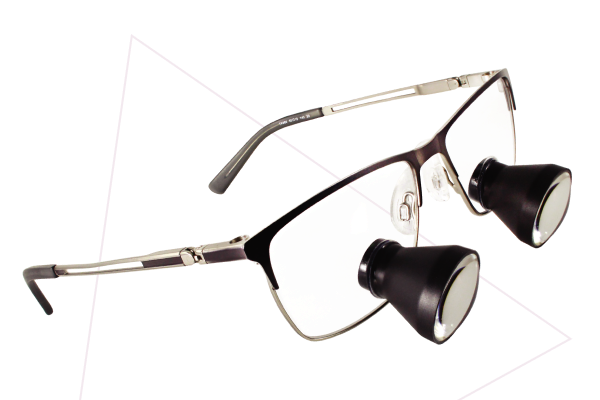
No feature is more important for comfort of the operator than the frame. PeriOptix frames have a wide variety of styles and adjustments, providing comfort, customisability and style.

Frames
No feature is more important for comfort of the operator than the frame. PeriOptix frames have a wide variety of styles and adjustments, providing comfort, customisability and style.
Frames
No feature is more important for comfort of the operator than the frame. PeriOptix frames have a wide variety of styles and adjustments, providing comfort, customisability and style.
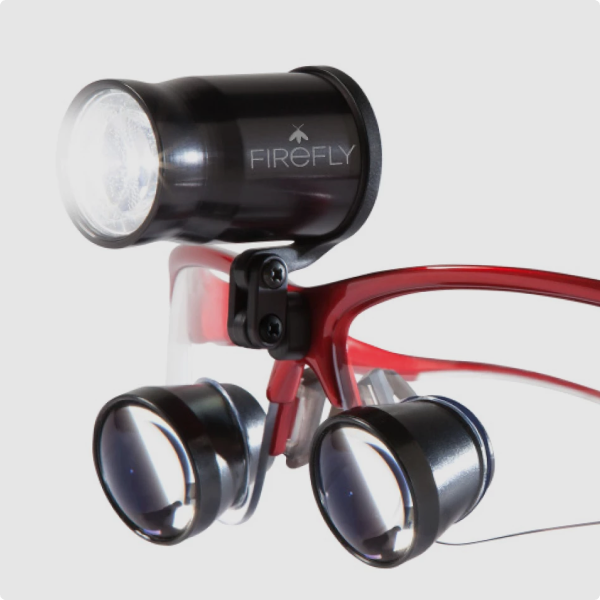
Firefly® Cordless Headlight System
Easily upgrade your loupes to incorporate a Firefly cordless headlight and enjoy the freedom to move through any procedure with confidence.- Eliminates heavy power packs and annoying cords
- Easy to clean, reducing the risk of cross-contamination
- Provides a well-defined and uniform spot with natural colour output
- Light Intensity: 2 settings — high 32,000 lux and low 20,000 lux
- Weight: 28 grams
- Field Illumination: 70 mm
- Available in black, red and blue
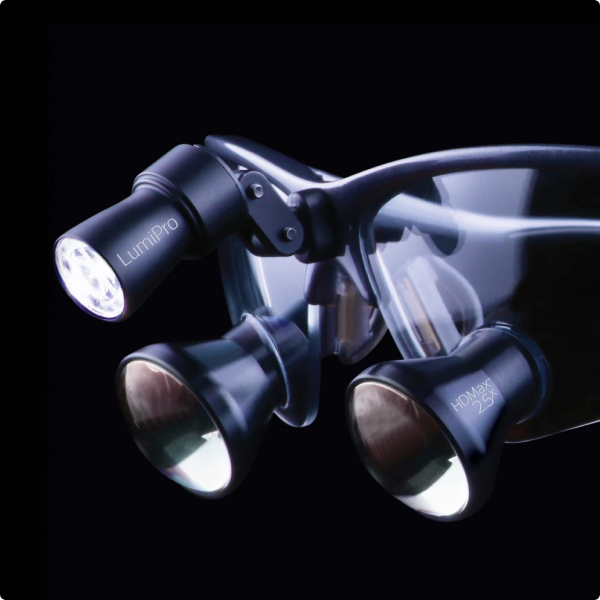
LumiPro Headlight System
This innovative light (with cord) maximises clarity, ergonomics and control alongside the following benefits:
- Uniform output of natural, bright light
- Enhanced spot size to illuminate the entire oral cavity
- Significantly smaller and lighter than most headlights in the market
- Easy-to-use soft-touch on/off and intensity adjustments to reduce the need to deglove
- 10+ hours of run time on high
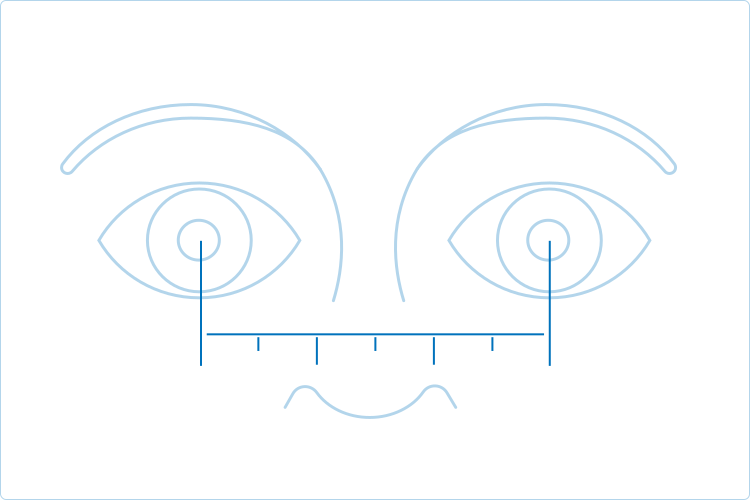
Pupillary Distance (PD)
This is the measurement, in millimeters, between the centers of the pupils in each eye. This measurement only takes a couple of minutes.
Working Distance