


 Back
Back























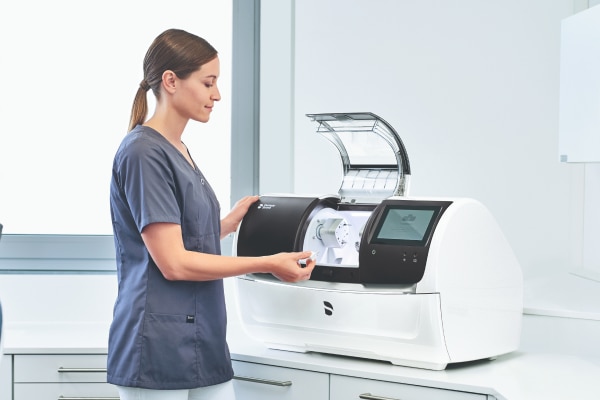
Dentsply Sirona Primemill
Revolutionise your practice with the Dentsply Sirona Primemill. Setting new standards for digital chairside dentistry with its advanced milling unit and highly automated software.
- CEREC workflow: Communicates effortlessly with other CEREC devices for a streamlined workflow. Find out more here.
- Outstanding precision: Delivers rapid and accurate scan data with Primescan and patented biojaw algorithm.
- Speed: Enables milling zirconia restorations in Super-Fast mode in just 5 minutes, cutting processing times by more than half.
- Versatility: Treats multiple indications with confidence, thanks to 35 years of continuous optimisation.
- Stylish design: Its sleek design makes it the perfect fit for a progressive dental practice.
The Dentsply Sirona Primemill, and associated CEREC workflow, also contribute to environmental sustainability. By reducing the need for multiple appointments and eliminating shipping requirements, it minimises patient journeys and significantly decreases CO2 emissions, aligning your practice with eco-friendly dental solutions. As well as this, when combined with the Primescan in the CEREC workflow, there is no need for impressions, facilitating a better patient experience and less material waste.
Exploring Lab Milling
Pros:
- Precision and quality: With lab milling, you get the benefit of the expertise and skill from the lab technicians themselves. Dental labs, equipped with advanced technology and experience technicians, can achieve intricate details that may be challenging with chairside alternatives.
- Diverse material options: Dental labs provide a range of material options for milling, catering to complex cases that may require specialised materials. This flexibility is a key advantage.
Cons:
- Turnaround time: Unfortunately, outsourcing any process will increase your waiting time. Consider the impact on patient scheduling and set expectations accordingly.
- Communication challenges: Effective communication between the dentist and the dental lab is crucial. Miscommunication can lead to delays in the production process and potentially affect patient timelines. If working with your lab is right for you, an intraoral scanner can vastly improve your teamworking.
Factors to consider:
- Case complexity: Consider the nature of your cases. Chairside milling may excel in straightforward cases, while lab milling could be preferable for intricate restorations.
- Budget and resources: Evaluate your budget and available resources. While chairside milling comes with an initial investment, lab milling may require ongoing collaboration expenses.
- Training and skill level: Assess the proficiency of your team. Chairside milling necessitates trained personnel, while lab milling requires effective communication and coordination with dental technicians.
Share


