


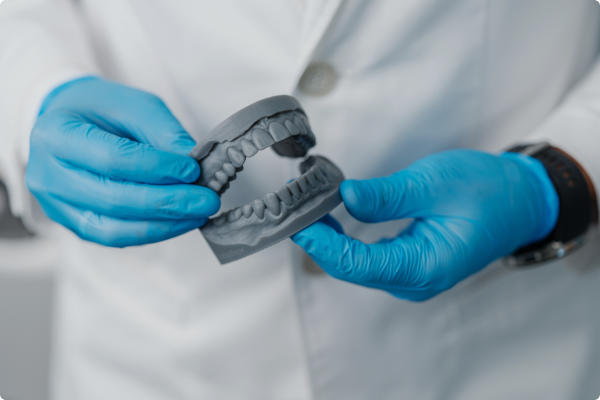
The convenience of in-house 3D printing is cost effective, streamlines workflow, and saves time and effort, allowing you to produce same-day crowns, custom surgical guides, and clear aligner models and dentures within minutes, with an extremely high degree of accuracy.
We spoke to Henry Schein Senior Fast Track Specialist, Mosin Aboobaker, about the rise of the 3D printer, and how you can incorporate 3D printing into your dental practice or laboratory. Starting his Henry Schein career as a Laboratory Specialist almost 10 years ago, Mosin has extensive industry experience and is now the Connect Sales Specialist for Scotland and the Advanced Rebate Finance manager, while overseeing digital equipment for dental practices and laboratories. He summarises the basics of 3D printing, addresses common concerns, and explains how Henry Schein can help you join the 3D printing revolution.
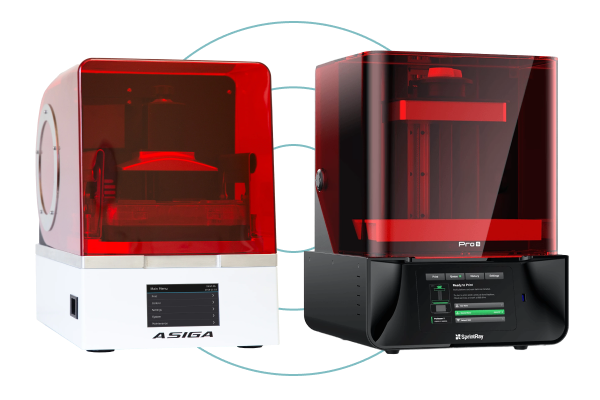
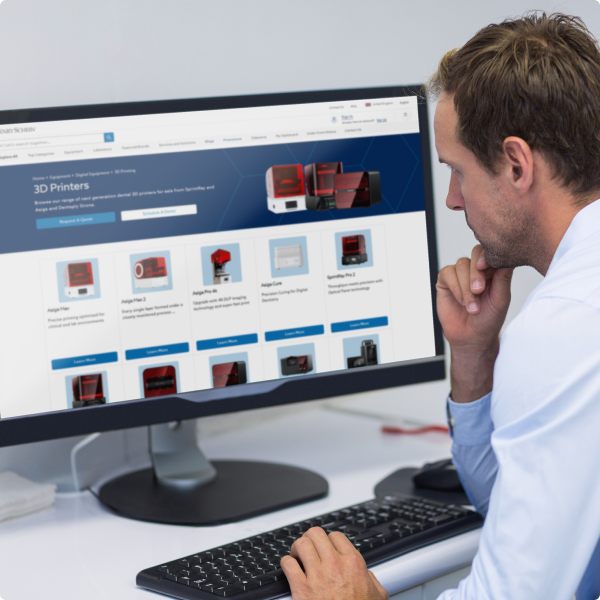
Browse our range of next generation dental 3D printers for sale from SprintRay and Asiga and Dentsply Sirona - the latest in 3D printing.

Explore 3D printers
Browse our range of next generation dental 3D printers for sale from SprintRay and Asiga and Dentsply Sirona - the latest in 3D printing.
Explore 3D printers
Browse our range of next generation dental 3D printers for sale from SprintRay and Asiga and Dentsply Sirona - the latest in 3D printing.
What are the key benefits of incorporating a 3D printer into your dental practice?
MA: One of the key benefits of incorporating a 3D printer into your dental practice is that you can reduce your lab costs. If you are planning an implant for a patient, you will require a surgical guide, and dental laboratories can charge anywhere between £50-£150 for this. With a 3D printer, if we look at just the base cost of the resin, a surgical guide could cost you as little as £2-£3 per guide.
3D printers have the functionality to print digital crowns as well, whether that’s for temporary or permanent resolutions. So if you need a temporary crown for a patient, you can scan and design it, send it to mill, and produce a much more cost-effective temporary crown, without the need for any additional temporary materials.
Digital workflows also reduce storage costs, particularly in orthodontic practices. 3D printers go hand in hand with intraoral scanners: if your orthodontic practice has an intraoral scanner, you don't need to keep digital models for 10 years, and if you've got a 3D printer and require a digital model, you can print one out in the space of 20 minutes or less.
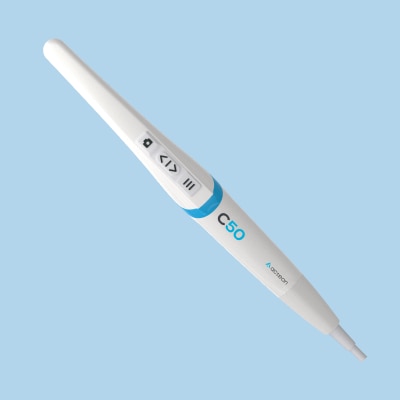)
Intraoral Cameras
Intraoral cameras provide an affordable entry point to get you started in digital imaging with great high quality intra-oral images.
What should you look for when choosing a 3D printer? And what considerations differ from practice to practice?
MA: The main things to consider are what you're looking to print, how accurate of a model you need to print, and what your budget is. Whether you're a starter surgery or a high-end surgery, Henry Schein’s selection of 3D printers are designed to fit the needs of every practice. For example, if we look at the full SprintRay package, you get the printer, the wash and dry unit, and the curing unit, as well as 1kg of resin.
I would advise that you start off small by printing models, temporary crowns, and surgical guides, for instance, before exploring the printing of temporary dentures, denture bases, and teeth. SprintRay have developed a new tank for the Pro 2 that allows you to print a denture base and teeth at the same time on its specially devised platform, as opposed to doing two individual prints.
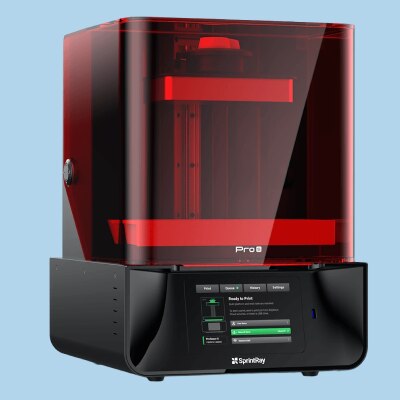)
SprintRay Pro 95 S
Intelligent workflows to meet the specific needs of your practice
How can Henry Schein help you find the right printer for your practice?
MA: At Henry Schein, we have a wide range of printers available to suit all needs, and we will speak with you extensively before your purchase to determine which printer is the right fit for your practice or lab.
We supply 3D printers from a variety of trusted brands, including SprintRay’s Midas printer which is extremely compact and ideal for chairside use. The Midas is a resin based dental 3D printer that uses a novel method called Digital Press Stereolithography (DPS), which is a patented printing method where the resin, tank, and build platform are replaced by a single-use resin capsule. Because of this capsule design, Midas can handle highly filled, very viscous resins that would be difficult to print on conventional resin printers. It also offers an impressive ouput, with the ability to print up to three full crowns (or sets like six inlays/nine veneers) in under 10 minutes.
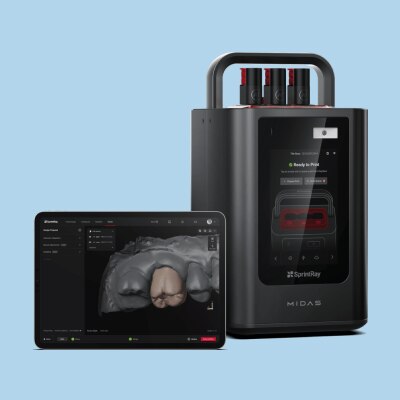)
SprintRay Midas
Meet SprintRay Midas, the Digital Press Stereolithography dental 3D printer designed to make chairside restoration effortless, precise, and cost-effective.

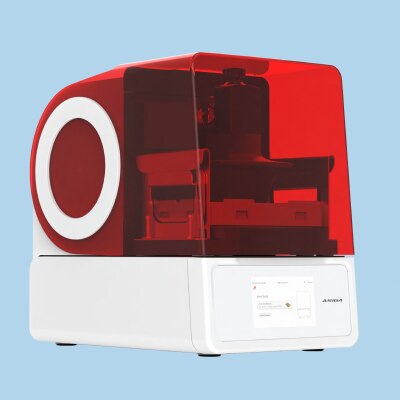)
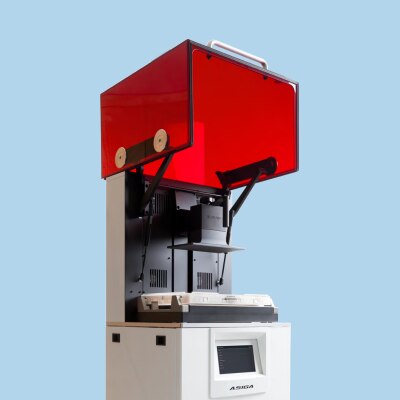
Asiga Max 2
Every single layer formed under a closely monitored process delivering exceptional consistency and performance
)
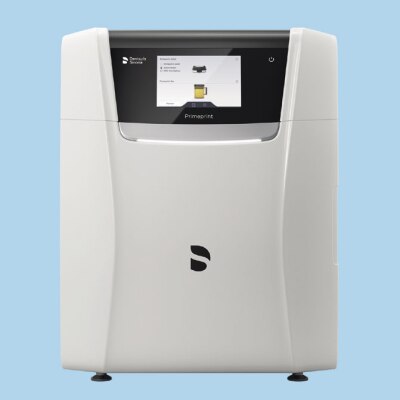)
Dentsply Sirona Primeprint
Gain the benefits of end-to-end automation tailored to dentistry
)
3D Printing
Learn about the range of 3D printing technologies available and how to find the right 3D printer for your dental lab or dental practice.
If you're about to invest in dental equipment, you could be able to combine your costs and benefit from Advance.
Eligible customers will receive a rebate based on their merchandise and clear aligner spend, which can help cover the cost of your equipment.
Henry Schein Advance
If you're about to invest in dental equipment, you could be able to combine your costs and benefit from Advance.
Eligible customers will receive a rebate based on their merchandise and clear aligner spend, which can help cover the cost of your equipment.
Henry Schein Advance
If you're about to invest in dental equipment, you could be able to combine your costs and benefit from Advance.
Eligible customers will receive a rebate based on their merchandise and clear aligner spend, which can help cover the cost of your equipment.
Never Miss Out
Sign-up to our mailing list and keep up to date with the latest offers and news.You May Also Like
)
CQC Updates 2026
Stay informed on the latest CQC updates for dental professionals, covering registration, mythbusters, non-rated services, and assessment frameworks.

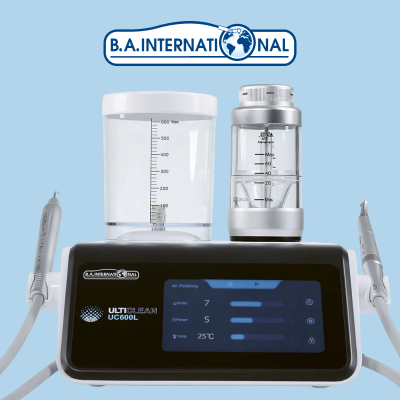)
Supporting Hygiene Appointments
Discover how the BA International Ulticlean UC600L can help you deliver comfortable, flexible and efficient hygiene appointments for modern patients.
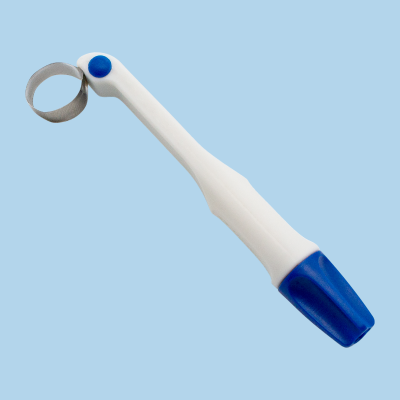)
SafeMatrix Bands
Transform your day-to-day restorative workflow with SafeMatrix – the single-use matrix bands you can rely on.
)
)
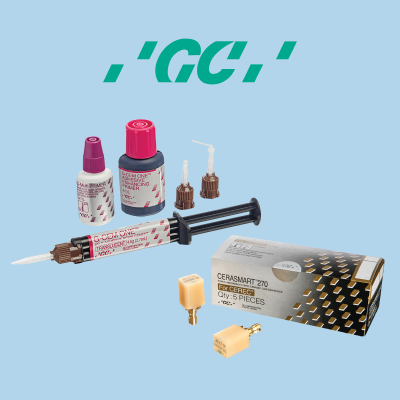)
Digital Restoratives From GC
Streamline digital restorative workflows in your practice with reliable solutions from GC, including CERASMART270 blocks and G-CEM ONE™ cement.
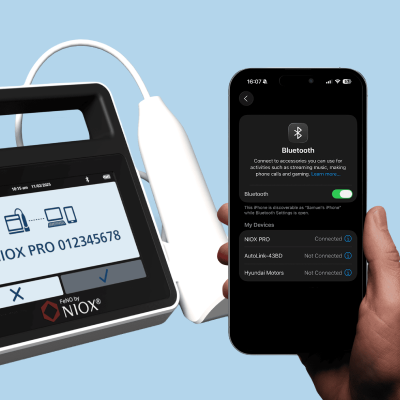)
NIOX PRO
Learn how NIOX PRO delivers fast, reliable FeNO testing with enhanced usability and connectivity to support evidence-based asthma care.
)
Services And Solutions
Explore our full range of services and solutions, designed to support dental professionals throughout every stage of their careers.
)
Oral Health Awards 2026
The Association of Dental Education in Europe, the European Dental Students’ Association, and Henry Schein grant the 2026 Oral Health Professional Educators’ Awards.
)
The Key To Staff Retention
Struggling with staff retention? mydentist’s chief clinical officer, Nyree Whitley, gives her advice on how you can attract and keep staff in your dental practice by perfecting your basics.
)
Reducing Endodontic Chair Time
Explore how dental professionals can reduce endodontic chair time without compromising care.
)
Ophthalmoscopes Guide
A practical guide to ophthalmoscopes for healthcare professionals, covering features, types and considerations for accurate eye examinations.