Back
Back
























Sceptical About Results? Go Professional!
Perhaps in the past you’ve tried over-the-counter whitening solutions and been disappointed in the result being either imperceptible, or short-lived?
Over-the-counter solutions may seem appealing due to their lower cost and convenience, but professional teeth whitening is a better choice for those seeking a brighter, more radiant smile.
First and foremost, professional teeth whitening is much more effective than over-the-counter solutions. The whitening agents used in professional treatments are much stronger and typically applied using custom-fitted trays or during in-office procedures that are tailored to your specific needs. As a result, professional whitening can remove even deep stains and discolouration, resulting in a noticeably brighter and more even smile.
In addition, professional teeth whitening is much safer, as it is performed under the supervision of a trained dental professional. This means that the risk of sensitivity or damage to the teeth and gums is greatly reduced, and any issues that do arise can be addressed immediately.
As well as being tailored to your needs and able to provide a more effective whitening treatment, the professional Opalescence range from Ultradent comes with a variety of solutions, so you can find a treatment that suits your needs and lifestyle without compromising on results.
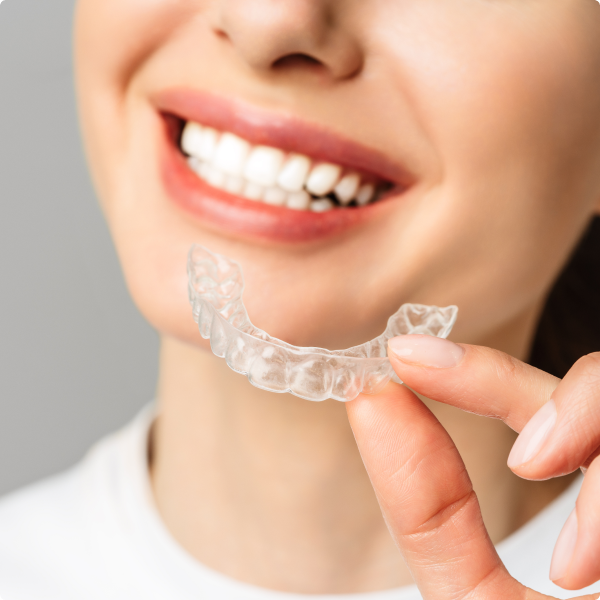
Opalescence Go
A simple definition of CAD/CAM dentistry is the use of digital software to design and manufacture dental restorations and prostheses. CAD stands for computer-aided design and CAM stands for computer-aided manufacturing. The technology can be used to create crowns, dentures, inlays, onlays, bridges and veneers among other things. The speed of the CAD/CAM process allows for dental prosthetics to be designed, manufactured and delivered to the patient in quick time, sometimes the same day. The wider system of using computer assisted technologies to produce restorations is known as CEREC (Chairside Economical Restoration of Aesthetic Ceramics).
Opalescence Whitening Toothpaste
A simple definition of CAD/CAM dentistry is the use of digital software to design and manufacture dental restorations and prostheses. CAD stands for computer-aided design and CAM stands for computer-aided manufacturing. The technology can be used to create crowns, dentures, inlays, onlays, bridges and veneers among other things. The speed of the CAD/CAM process allows for dental prosthetics to be designed, manufactured and delivered to the patient in quick time, sometimes the same day. The wider system of using computer assisted technologies to produce restorations is known as CEREC (Chairside Economical Restoration of Aesthetic Ceramics).
Opalescence Office
A simple definition of CAD/CAM dentistry is the use of digital software to design and manufacture dental restorations and prostheses. CAD stands for computer-aided design and CAM stands for computer-aided manufacturing. The technology can be used to create crowns, dentures, inlays, onlays, bridges and veneers among other things. The speed of the CAD/CAM process allows for dental prosthetics to be designed, manufactured and delivered to the patient in quick time, sometimes the same day. The wider system of using computer assisted technologies to produce restorations is known as CEREC (Chairside Economical Restoration of Aesthetic Ceramics).
Share


You May Also Like