


Are You Feeding Contaminated Water To Patients?
Did you know that water that looks crystal clear may be hiding thousands of harmful bacteria, invisible to the naked eye?
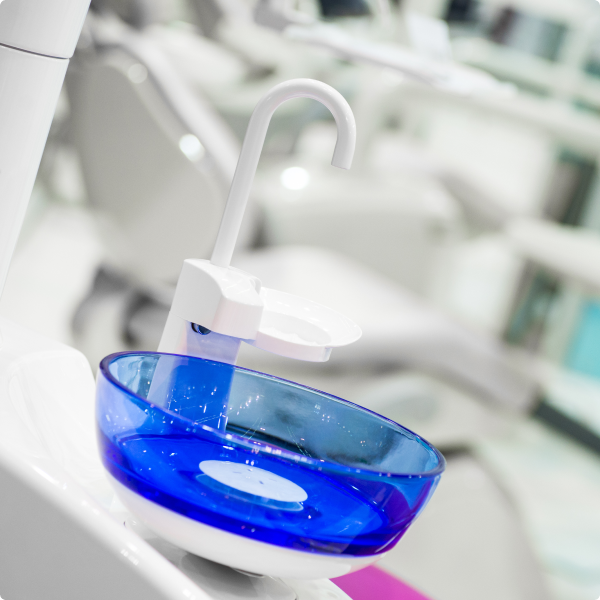
The waterlines that feed dental units are the perfect environment for bacteria and biofilm to flourish, and yet many dental practices don’t do anything to treat their waterlines. The EU drinking water standard is 100 CFU/ml, but dentisan estimates that almost half of dental practices routinely feed lower quality water than this through their dental waterlines. The water that runs through these potentially contaminated waterlines goes into patients’ mouths, comes into contact with open wounds during oral surgery, and can be swallowed by patients.
Are you exposing your vulnerable patients to unnecessary risk?
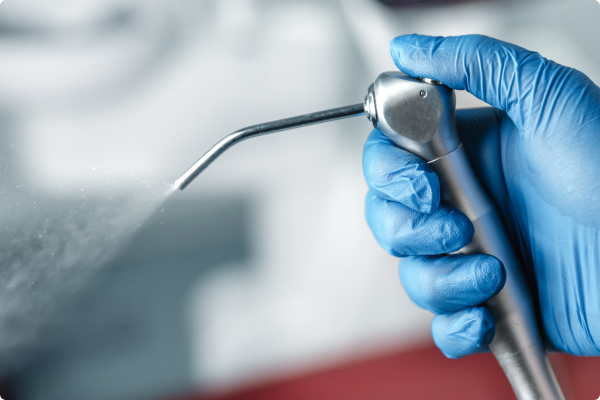
This EPS acts as a protective matrix, allowing the microorganisms to adhere to the surface and form a cohesive structure. As the biofilm develops, more microorganisms join the colony, leading to the formation of complex three-dimensional structures that are much harder to break down and fully remove. Within the biofilm colony, the microorganisms develop defence against threats, and resistance to antimicrobial agents. Microbial counts can reach ≥ 200,000 colony-forming units (CFU/ml) within 5 days after installation of new dental unit waterlines.
Biofilms in dental unit waterlines form when microorganisms present in the water supply attach to the inner surfaces of the waterline tubing. The biofilm matrix protects the microorganisms, allowing them to multiply and form a resilient colony.
Dangers Of Biofilm In Dental Unit Waterlines
Water contamination

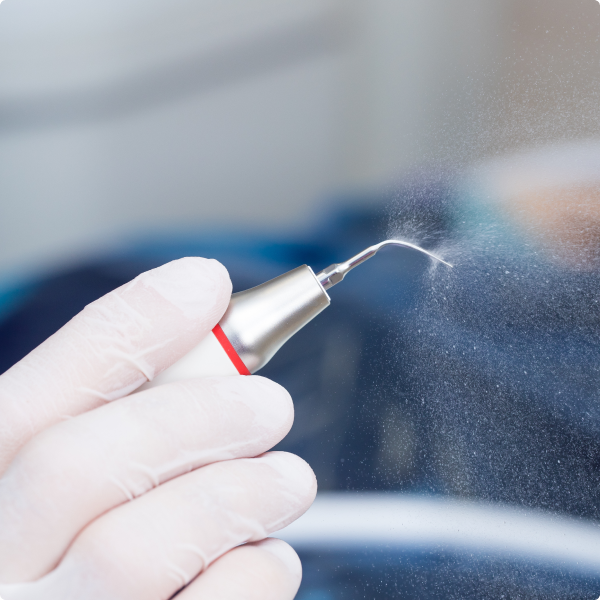
The biofilm acts as a reservoir for microorganisms, including bacteria, fungi, algae, protozoa, nematodes, and even pathogens in extreme cases. As water flows through the contaminated waterlines, these microorganisms can detach from the biofilm and contaminate the water supply, potentially exposing patients and staff to a host of harmful microbes.
Impaired water quality

The biofilm itself can degrade the quality of the water. It can release substances and metabolic by-products that alter the taste, odour, and colour of the water. The presence of biofilms may also promote the growth of bacteria that produce sulphur compounds, resulting in foul-smelling water.
Risk of infection

When patients are exposed to water contaminated with pathogenic microorganisms, there is a risk of infection. Some pathogens commonly associated with dental unit waterlines include legionella, pseudomonas aeruginosa, and mycobacterium species.
These microorganisms can cause respiratory infections, pneumonia, or other systemic infections, particularly in individuals with compromised immune systems.
Is That A Risk You’re Happy To Take?
Don’t trust your eyes!
Biofilm, the microorganisms that form it, and the bacteria and pathogens that are caused by it, are all invisible to the naked eye. They can be invisible, odourless, and tasteless.
You cannot assume water that looks clear is uncontaminated, even if it also tastes and smells normal. So, if you cannot trust your eyes, how can you tell if your water is clean? The answer is simple, you need to conduct regular tests on the water passing through your waterlines.
Doing this independently can be expensive, time consuming, and leave you without tangible evidence that you have clean waterlines. If you want to clean up your waterlines in an easy, convenient, and provable way, you need to join dentisan’s Clean Water Club!
Join the Clean Water Club: your solution to contaminated waterlines
How Does It Work?
Step one: Purge
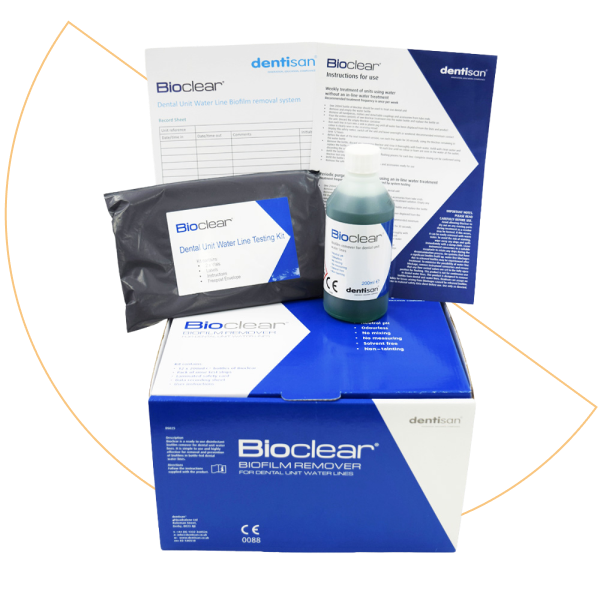
Remove existing biofilm from your waterlines with Bioclear. The Bioclear solution is simple to use, requiring only a pre-measured and ready-to-use dose of liquid to be put through the waterline and left overnight. Then in the morning you can flush the system with clean water.
Did you know that microbial counts can reach greater than or equal to 200,000 CFU/ml in just five days after installation of new dental waterlines. Because of how quickly biofilm can form, you should purge your waterlines once a week unless you are using a daily chemical, such as bioclear daily.
Step two: Prevent
With biofilm effectively eliminated from your waterlines, it's time to shift your attention towards preventing its reformation.
You can do this by using Bioclear Daily, a low-dose disinfectant designed to maintain clean waterlines without compromising the taste or odour of your water.
Step three: Monitor
Using Bioclear Daily will help you to keep biofilm out of your waterlines and therefore contaminated water out of the mouths of your patients.
It is paramount that you test your waterlines.
The Clean Water Club Makes This Simple.
As a member, you will be sent regular orders of Dip Slides, enabling you to take samples of your water. Pictures of the dip slides can then be uploaded to the Clean Water Club portal and submitted to the dentisan lab for analysis.
The lab uses a clear PASS/FAIL system, so that there is no grey area over the cleanliness of your waterlines. If you pass you will receive a report attesting to the cleanliness of your waterlines. If your waterlines fail, you will be able to respond quickly to the presence of biofilm using Bioclear, and Bioclear Daily.
The Clean Water Club works as a circular system. So if your dip slides pick up an unacceptably high level of CFU (colony forming units) in your water, you can return to the purge step and eradicate biofilm once again.
What are members saying?
The Clean Water Club is easy to use, easy to set up, and the clean water certificates come directly to your emails. All our nurses find all the products easy to use.

Since joining dentisan Clean Water Club last year, we have found the support and knowledge from dentisan very good. Our quarterly dip slides look more official now that we get a pass certificate from the Clean Water Club.

The Clean Water Club is easy to use, easy to set up, and the clean water certificates come directly to your emails. All our nurses find all the products easy to use.
Since joining dentisan Clean Water Club last year, we have found the support and knowledge from dentisan very good. Our quarterly dip slides look more official now that we get a pass certificate from the Clean Water Club.
Share


You May Also Like

National Smile Month 2025
Get involved with National Smile Month and foster better oral health in your communities.

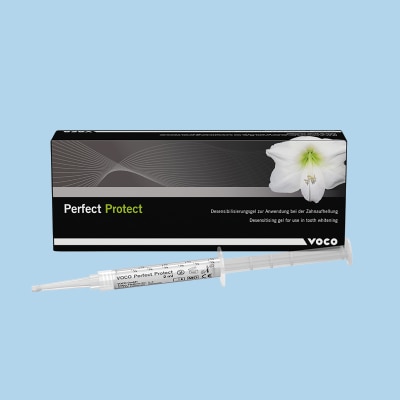
VOCO Perfect Protect
Address sensitivity in whitening patients and increase comfort and satisfaction with VOCO Perfect Protect, the at-home desensitising solution.
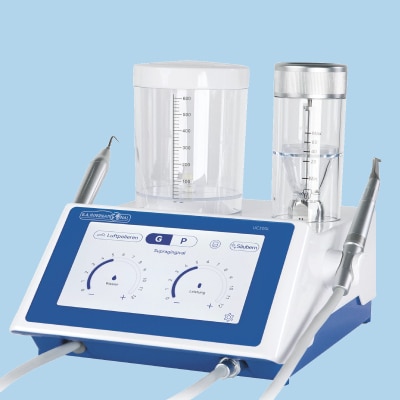
Ulticlean 500L Air Polisher
The Ulticlean 500L air polisher cleans with precision, polishes to exceptional smoothness, and reduces plaque and stain adhesion.
Dentyl Dual Action Mouthwash
Dentyl Dual Action mouthwash containing the powerful antimicrobial agent Cetylpyridinium Chloride (CPC) perfectly suited for pre-procedural mouth rinsing.

Guarding Patient Health
Do you know if your dental unit waterlines are clean? DUWLs play a significant role in the dental practices, but they can hide a silent threat.

The Restoration Workflow
Discover Henry Schein solution for a seamless restorative workflow, enabling you to complete strong and long-lasting dental restorations every time.
Disinfection In Dental Practice
From chemical disposal to water waste management to overuse, many aspects of dentistry directly impact the health of our water bodies.