


 Back
Back



























Emerging Applications of AI in Dentistry
Today’s dental clinics are no strangers to technology. Digital imaging, intraoral scanners, and CAD/CAM systems are already part of daily workflows. But AI goes a step further, it brings pattern recognition, prediction, and decision support into the mix.
Here’s where we’re seeing that potential unfold:
Diagnostics and Imaging
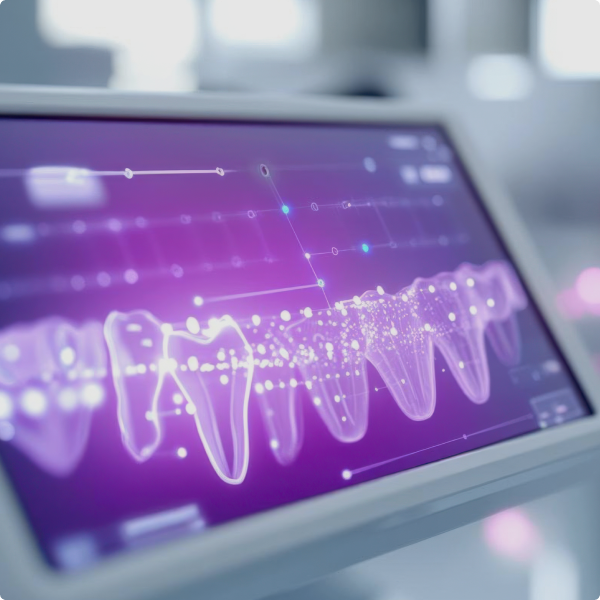
- AI can analyse radiographs and CBCTs with remarkable accuracy and consistency.
- Early detection of caries, periodontal bone loss, and even oral cancers is becoming faster and potentially more reliable.
- Some platforms highlight anomalies or risk areas before a clinician even picks up the mouse.
These tools don't replace the dentist's eye, but they can act like an always-alert second opinion, especially helpful on a full schedule or in a busy group practice.
Treatment Planning
- Orthodontic simulation software now uses AI to model tooth movement in real time.
- Implant planning tools predict bone integration success based on imaging and patient data.
- Periodontal prognosis models suggest personalised maintenance intervals.
AI isn’t diagnosing or prescribing, but it’s quietly informing choices in the background, and it’s getting better all the time.
Patient Interaction and Education
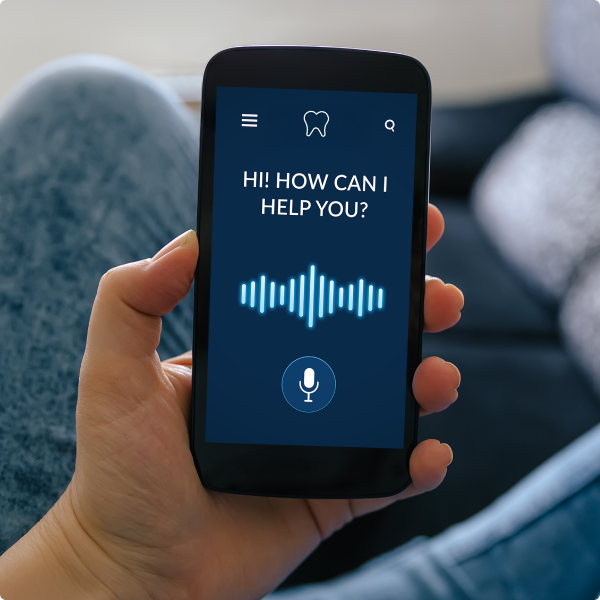
Chatbots and virtual assistants are being used to:
- Book appointments.
- Send pre- and post-op instructions.
- Answer basic oral health questions.
For patients who are nervous, time-poor, or hard to reach, these tools can improve communication without increasing your admin burden.
Practice Operations
AI tools are beginning to help with:
- Automating insurance coding and billing.
- Forecasting inventory needs.
- Predicting appointment no-shows.
These advances will work to reduce the administration burden in your practice, freeing up more time for seeing patients.
Is AI a Disruption or an Enhancement?
The phrase ‘disruptive technology’ can set off alarm bells. Will AI take over decision-making? Will it deskill the profession? But all ‘disruptive’ means in this context, is that it is going to change the way we do things – almost always because it is more efficient and more accurate.
What’s more, disruption doesn't have to mean replacement. More often, it means enhancement.
In dentistry, AI has the potential to:
- Improve diagnostic consistency, especially among large teams.
- Reduce cognitive load, freeing up time for patient conversations.
- Offer risk assessments, based on data too large for humans to process unaided.
Yes, there will be tension. Referrals might shift. Some aspects of the clinical eye may become augmented or even challenged. But if the profession leans in rather than resists, AI has the potential to act more as a microscope than a clinician —a tool that lets us see more, not do less.
The Future Outlook—and What’s Holding It Back
The AI-enhanced dental practice isn’t science fiction, it’s just around the corner. AI applications that are nearly with us include:
- Real-time caries detection.
- Predictive analytics suggesting which patients need closer recall intervals.
- Virtual consultations triaged by AI, then handed off to clinicians with a full summary of risk indicators.
Sounds ideal, and we know this technology is already appearing, but what’s slowing it down?
Current Barriers to Widespread Adoption
- Cost: Many AI systems require significant upfront investment, plus integration with existing software.
- Training: Dentists and teams need time (and motivation) to learn new systems.
- Standardisation: With so many platforms, there’s no ‘one system fits all’ yet.
- Regulation: Governing bodies are still deciding how to regulate AI-supported diagnostics and treatment tools.

Never Miss Out
Sign-up to our mailing list and keep up to date with the latest offers and news.Share


