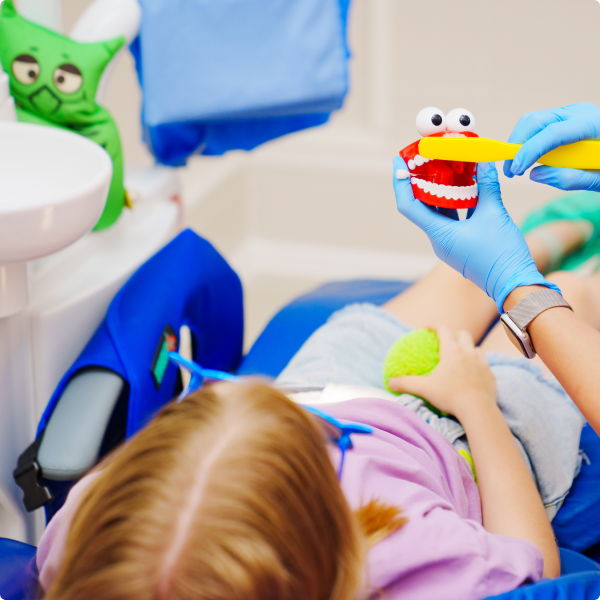
And that’s where psychology-informed supply choices come in. Recent research has shown that simple tools such as colours, stickers, and sensory distractions, can reshape a child’s emotional experience in the chair2345. The best part? These strategies are easy to implement.
Colour Isn’t Just Cosmetic: It’s Clinical
Children read colour as an emotional language. In a study of 100 children aged 6-1, both anxious and non-anxious participants consistently associated yellow with happiness, and red or black with sadness or fear. Notable, none of the children chose black as a preferred colour6.
This aligns with findings from a 2024 study that tested how clinic and uniform colours influenced anxiety during local anaesthetic administration. Children exposed to calming colours, like pastel pink, blue, green, and yellow, and significantly lower heart rates and self-reported anxiety. Red and black, on the other hand, had the opposite effect7.
For clinicians, this means that the colours of your supplies, PPE, and even operatory surfaces are far from trivial. They’re psychological signals; some comforting, others potentially threatening.

Distraction: The Oldest Trick In The Book
We’ve known for years that distraction helps, but emerging data is sharpening our understanding of what words best. A 2024 RCT compared children treated with and without audiovisual distraction. The cartoon-watching group reported lower pain levels, and their behaviour during treatment notably improved9.
Another study showed that visual-only distraction, such as passive cartoon view, reduced both self-reported anxiety and pulse rate in 4-5 year-olds, which is comparable – or even superior to – ‘tell-show-do’ techniques10.
The benefits of these techniques are particularly striking in neurodivergent patients, who often struggle with sensory overload. Tools like tablet-based visuals or overhead projection systems offer a non-invasive, effective way to engage them.