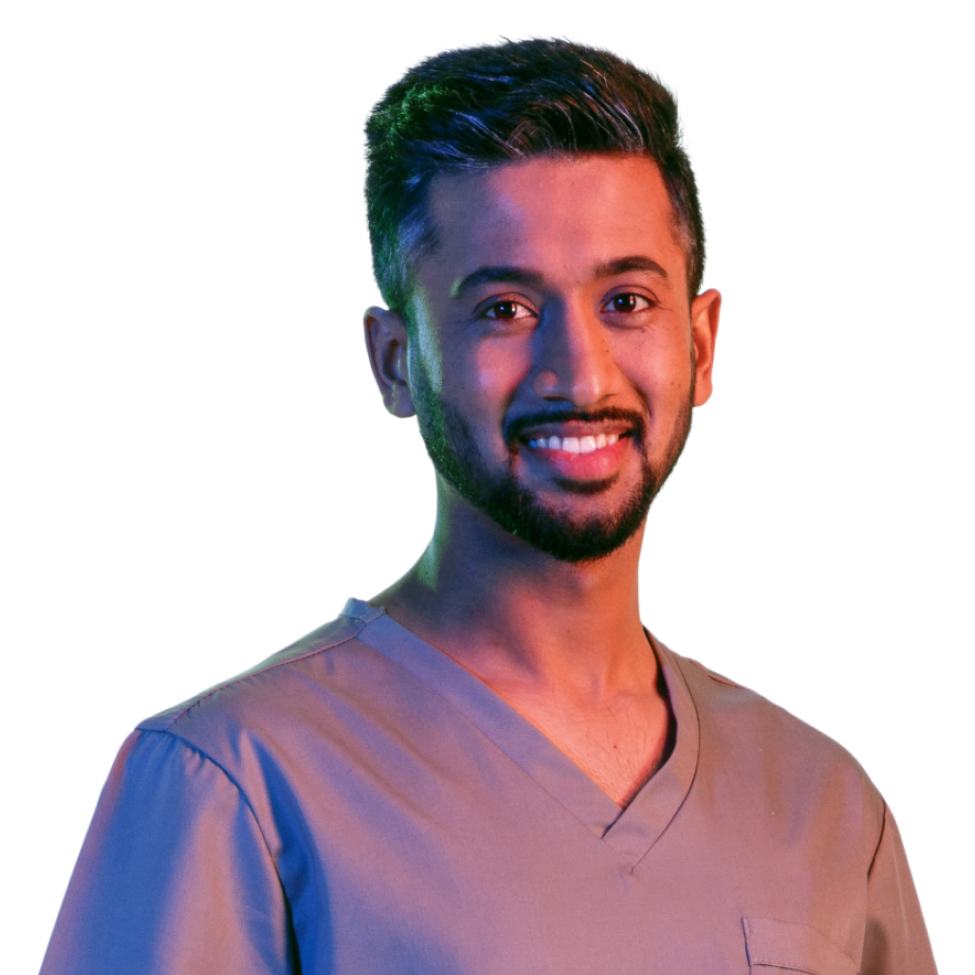
This article explores why root canal treatments in molars are more complex, and how to overcome common challenges such as curved canals, limited access, and higher failure rates, outlining practical solutions to help improve clinical outcomes, with insights from Adrian Stewart BDS, PGDip Endo(UCL), MSc(RestDent), MEndo, F(Endo)RCS Edinburgh.
Key Takeaways:
- Molar root canal treatment is more complex because of posterior access, curved canals and anatomical variation.
- MB2 canals are commonly missed in maxillary molars and may affect long-term prognosis.
- CBCT, magnification, apex locators, and flexible NiTi files can support diagnosis and navigation.
- Irrigation activation can help disinfect complex canal anatomy.
- A strong coronal seal and final restoration are essential to protect the treated molar.
Key Takeaways:
- Molar root canal treatment is more complex because of posterior access, curved canals and anatomical variation.
- MB2 canals are commonly missed in maxillary molars and may affect long-term prognosis.
- CBCT, magnification, apex locators, and flexible NiTi files can support diagnosis and navigation.
- Irrigation activation can help disinfect complex canal anatomy.
- A strong coronal seal and final restoration are essential to protect the treated molar.
"Molar teeth present several challenges during Endodontic treatment. These include, but are not limited to:
- Variable and unpredictable canal anatomy – think MB2, mid-mesial canals, isthmuses between canals, and apical bifurcations.
- Canals are already narrow, but can become much more so over years of bruxism and restoration.
- Roots are very often curved, in three dimensions.
- Access can be difficult at the best of times, but can be much worse in a patient with reduced or limited opening."
Adrian Stewart BDS, PGDip Endo(UCL), MSc(RestDent), MEndo, F(Endo)RCS Edinburgh
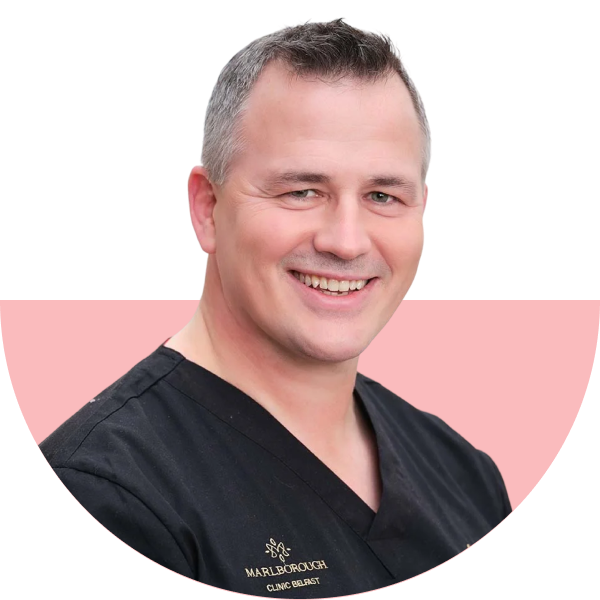
"Molar teeth present several challenges during Endodontic treatment. These include, but are not limited to:
- Variable and unpredictable canal anatomy – think MB2, mid-mesial canals, isthmuses between canals, and apical bifurcations.
- Canals are already narrow, but can become much more so over years of bruxism and restoration.
- Roots are very often curved, in three dimensions.
- Access can be difficult at the best of times, but can be much worse in a patient with reduced or limited opening."
Adrian Stewart BDS, PGDip Endo(UCL), MSc(RestDent), MEndo, F(Endo)RCS Edinburgh
Ultimate Endo Guide
Ensure your endodontic treatments are well rounded and reliable with our complete step-by-step guide of the endodontic workflow, created to help you achieve the best outcomes for your patients.
Accessing the multiple roots and canals in molars can be difficult without the right products for canal detection and accurate length measurement. Advanced technologies in dentistry can offer a range of innovative solutions that are more effective than – but can be used in conjunction with – standard radiographs.
- Electronic Apex Locators (EALs): Offering increased accuracy compared to radiographs, EALs can effectively determine apical constriction or variations and detect root canal perforations, while simultaneously reducing the need for multiple X-rays: ideal for reducing radiation risk to the patient, increasing their comfort, and decreasing chair time.
Accessing the multiple roots and canals in molars can be difficult without the right products for canal detection and accurate length measurement. Advanced technologies in dentistry can offer a range of innovative solutions that are more effective than – but can be used in conjunction with – standard radiographs.
- Electronic Apex Locators (EALs): Offering increased accuracy compared to radiographs, EALs can effectively determine apical constriction or variations and detect root canal perforations, while simultaneously reducing the need for multiple X-rays: ideal for reducing radiation risk to the patient, increasing their comfort, and decreasing chair time.
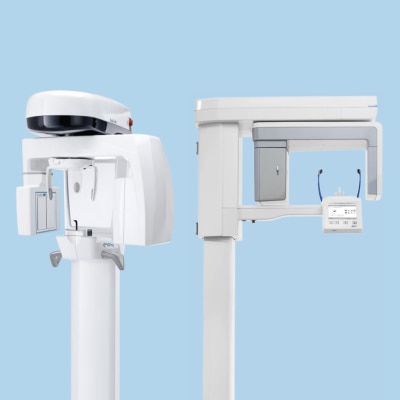
3D Imaging
A CBCT scanner is a state-of-the-art scanning machine that is used to produce precise, high resolution 3D images of a patient’s mouth including the teeth, jaws, soft tissue and bones – all with high levels of detail.
"When you use a CBCT scanner, you’re not just seeing a 2D image: you're getting a 360° view of the anatomy. You can clearly visualise the space from multiple angles for a more accurate diagnosis of what's going on inside your patient’s mouth."
Read Laura’s full CBCT Q&A here.
Laura Cooper, Henry Schein Equipment Sales Specialist
"When you use a CBCT scanner, you’re not just seeing a 2D image: you're getting a 360° view of the anatomy. You can clearly visualise the space from multiple angles for a more accurate diagnosis of what's going on inside your patient’s mouth."
Read Laura’s full CBCT Q&A here.
Laura Cooper, Henry Schein Equipment Sales Specialist
Improving Obturation and Restoration
Choosing an effective sealer during root canal treatment can increase the success rate and preserve the remainder of the tooth. Traditionally, epoxy resin, ZOE-based (zinc oxide eugenol), calcium hydroxide, glass ionomer or silicone-based resins have been used by dentists, but these each present their own issues: from solubility and brittleness, to weak seals or adhesion.
- Bioceramic Sealers: Made from calcium silicate-based materials, bioceramic sealers are now the most commonly used sealer among endodontists,4 offering biocompatibility, antibacterial properties, and reduced shrinkage. Bioactive properties allow the sealer to bond chemically with dentine, for superior sealing of the tooth: essential for preservation of the remaining molar.
Improving Obturation and Restoration
Choosing an effective sealer during root canal treatment can increase the success rate and preserve the remainder of the tooth. Traditionally, epoxy resin, ZOE-based (zinc oxide eugenol), calcium hydroxide, glass ionomer or silicone-based resins have been used by dentists, but these each present their own issues: from solubility and brittleness, to weak seals or adhesion.
- Bioceramic Sealers: Made from calcium silicate-based materials, bioceramic sealers are now the most commonly used sealer among endodontists,4 offering biocompatibility, antibacterial properties, and reduced shrinkage. Bioactive properties allow the sealer to bond chemically with dentine, for superior sealing of the tooth: essential for preservation of the remaining molar.
What Do Endodontic Experts Recommend For Complex Molar Cases?
Adrian Stewart (BDS, PGDip Endo(UCL), MSc(RestDent), MEndo, F(Endo)RCS Edinburgh) has an expansive industry knowledge and is familiar with the challenges molars can present, and how to overcome them.
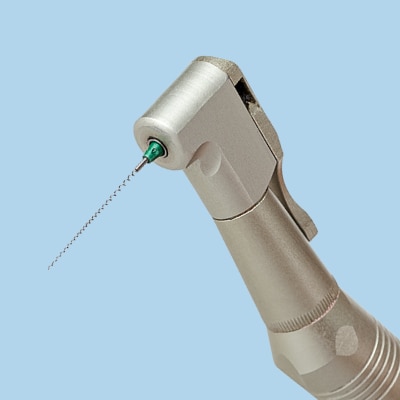
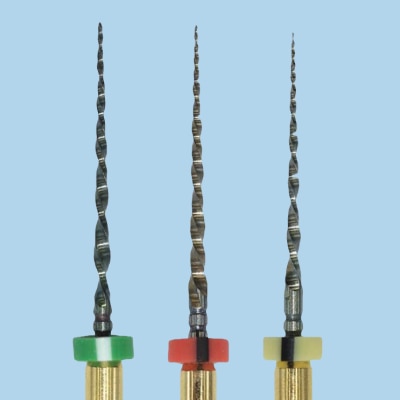
"One of the biggest game changers for management of molar teeth has been the advent of ‘Shape Memory’ files. These files, which are more martensitic than the traditional NiTi alloys, are capable of being pre-curved, to aid insertion to the canal orifice in cases where access is limited.
Martensitic files are also more conservative of canal architecture, as they tend to follow the natural curves of the molar canals, rather than try to impose a shape upon them.
Another advantage is their tendency to ‘unwind’ before fracture. Careful inspection of the flutes between uses in a very tight canal can often reveal a file that is under stress, allowing the dentist to dispose of and replace it. With more austenitic alloys, very often, the first sign that the file is over-stressed is when it emerges from the canal 2mm shorter than it went in.
Currently, my file of choice is EdgeEndo X7 Utopia. In the 4% taper, it has a shorter working portion than many files, with a maximum diameter of 1mm. This is very conservative of the pericervical dentine, which is so important for prolonging the life of the tooth after RCT."
Adrian Stewart (BDS, PGDip Endo(UCL), MSc(RestDent), MEndo, F(Endo)RCS Edinburgh)
1. Why are root canals more difficult in molars?


2. What tools can help dentists manage molar root canal treatments?
3. How can dentists reduce the risk of root canal failure in molars?
4. Why is visibility so important during molar root canal treatment?
5. How can irrigation be improved in deep or curved molar canals?
6. Are NiTi files useful for curved molar canals?
7. Can bioceramic sealers be used with warm vertical condensation?