Back
Back





























The Unique Form of Flowable Composites
Flowable resin-based composites are distinguished by their reduced filler load and the use of less viscous monomers1. They can be employed alongside conventional composites, but many contemporary options achieve results comparable to traditional materials. This means that, where applicable, flowable composites can be utilised for the entire restoration without any compromise in quality.
Typically, the filler load in restorative composites ranges from 37% to 53%1. It's important to note that the difference in inorganic filler primarily lies in quantity, with an increase in dilutant monomers. The size of the filler particles generally remains consistent across different products. However, it’s essential to point out that not all flowable composites are identical; each product may contain unique inorganic fillers, with variations in type, size, and geometry2. These differences impact the clinical properties of the material, offering clinicians the flexibility to choose specific flowable composites based on their treatment goals or personal preferences.
One measurable outcome related to the choice of flowable composites is compressive strength, which refers to the durability of a filling over time. This strength often correlates with the amount of inorganic filler present; however, variations in filler type, size, and geometry can also influence performance.

Avoiding Voids: The Role of Clinical Skill
The success of a dental restoration hinges not only on the materials used but also on the clinician's skill. One potential complication that can arise is the creation of voids—air pockets trapped within the composite material. These voids can occur due to insufficient application techniques, resulting in uneven material distribution or the entrapment of air within the composite itself3.
While minor voids may not pose significant issues for the patient, they can lead to unsatisfactory visual results in radiographic exams3. More serious voids, however, can jeopardise the integrity of the restoration. If they are large enough, voids can cause cracks to form under stress, diminishing the durability and performance of the restoration4. Defects at restorative margins can also lead to microleakage and discoloration, both of which are significant concerns that may necessitate more invasive retreatments.
Embracing Modern Advancements
Modern flowable composites have been engineered to optimise application and reduce the incidence of void creation in several ways, particularly through improvements in syringe design. Dental professionals should seek flowable composites that enhance ease of access to restorative sites, minimising the potential for errors during application. Additionally, innovative syringe designs allow air to escape rather than becoming trapped within the composite.
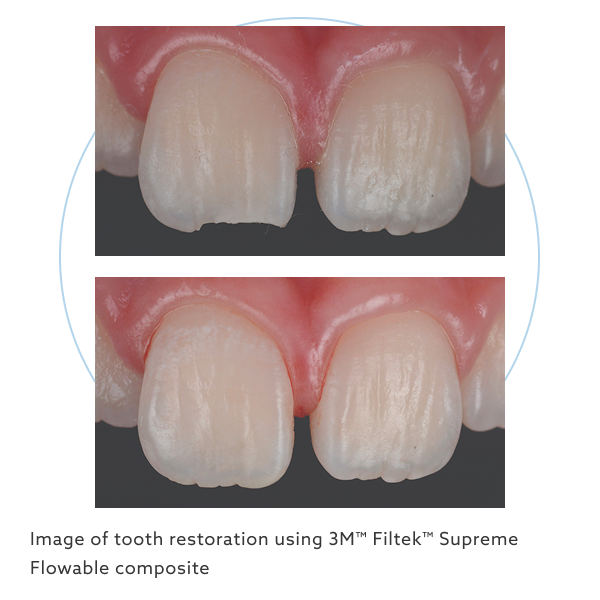
A prime example of this is the 3M™ Filtek™ Supreme Flowable Restorative from Solventum, formerly known as 3M Health Care. This product features an upgraded syringe and a new tip design that effectively eliminates trapped air. The design allows air to escape through venting on the plunger, resulting in virtually no bubbles. The 3M™ Filtek™ Supreme Flowable Restorative excels in adapting to the oral cavity, offering exceptional polish retention and wear resistance, along with natural-looking results that ensure your patients can smile confidently for years to come.