Are Dental Impressions Becoming A Thing Of The Past?
Digital dentistry is here to stay, and there is one piece of equipment at the forefront of the revolution: the intraoral scanner. Enhancing patient experience, streamlining workflow, and producing precise, accurate results, intraoral scanners allow you to capture 3D images that can transform the way your dental practice runs.
In 2023, it was estimated that around 38% of dentists had incorporated an intraoral scanner into their practice1, and the number of digital impressions had tripled compared to a decade ago.2 So what’s stopping you from making the change?
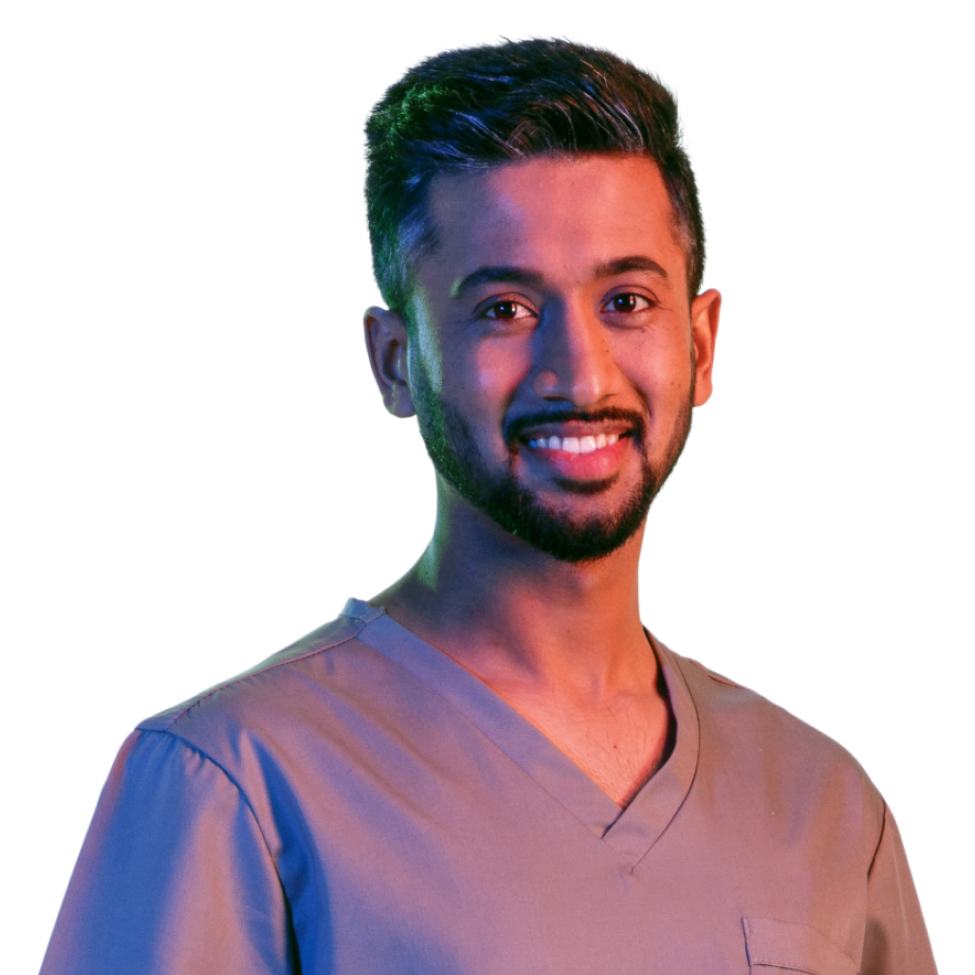
With the cost of intraoral scanners gradually decreasing, making them more accessible than ever, it is vital that you don’t get left behind. Mosin Aboobaker is a Senior Fast Track Specialist for the whole of Henry Schein UK, and boasts a wealth of knowledge spanning multiple areas of the dental industry. Starting his Henry Schein career as a Laboratory Specialist almost 10 years ago, he is now the Connect Sales Specialist for Scotland and the Advanced Rebate Finance manager, while overseeing digital equipment for dental practices and laboratories. Mosin is here to explain why you need an intraoral scanner in your surgery, and how Henry Schein can help you embrace the digital revolution.
- https://pmarketresearch.com/hc/digital-3d-intraoral-scanners-market/
- https://www.marketgrowthreports.com/market-reports/intra-oral-scanners-market-104547?/
What are the benefits of incorporating an intraoral scanner into your dental practice?
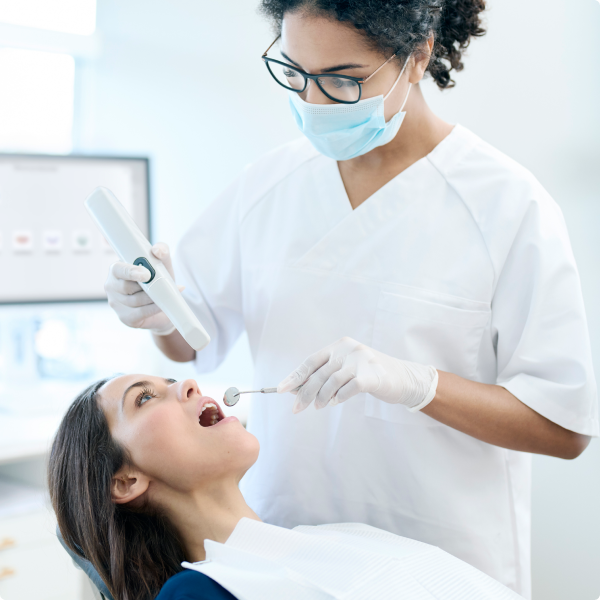
Mosin Aboobaker: Firstly, intraoral scanners remove a lot of the inaccuracies that you can get from using dental impression materials. An impression material can only be as accurate as the mixing of it, whereas an intraoral scanner eliminates those inaccuracies in as little as 15 or 30 seconds when scanning an arch. When using an impression material, you are essentially taking a negative of the patient's mouth, but the intraoral scanner takes an image that is an exact match of what you are seeing.
Intraoral scanners are time saving, and good for record-keeping as well. For example, 3Shape and SHINING 3D intraoral scanners can superimpose all the scans that you've taken for a patient, and tell you what changes have occurred – showing signs of bruxism, changes in nutrition, or gingival recession.
Investing in an intraoral scanner future-proofs and grows the value of your practice, as well as increasing patient acceptance. If a patient has the choice between a dentist who uses impressions, or a dentist using digital scanning – which they know would eliminate the need for any unpleasant impression material in their mouth – which dentist do you think the patient is more likely to choose?
)
Tackling Patient Retention
With the rise of dental tourism, patients are more likely than ever to shop around, discover what you can do to ensure patient retention.
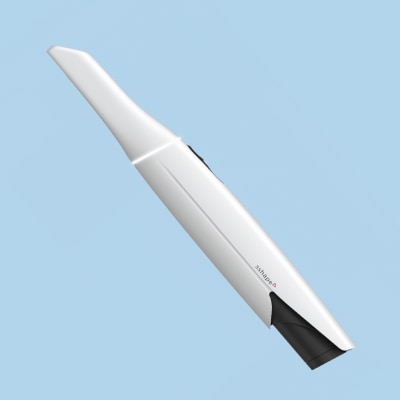)
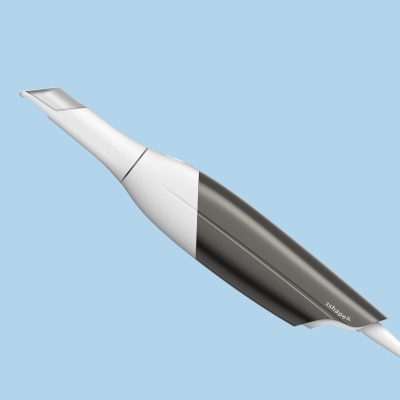
3Shape TRIOS 5
Combine technology, ergonomics, ease-of-use, and hygiene
)
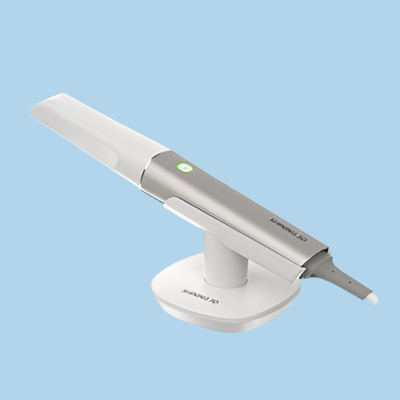
3Shape TRIOS 3
3-in-1 solution for fast 3D digital impressions with an integrated intraoral camera
)
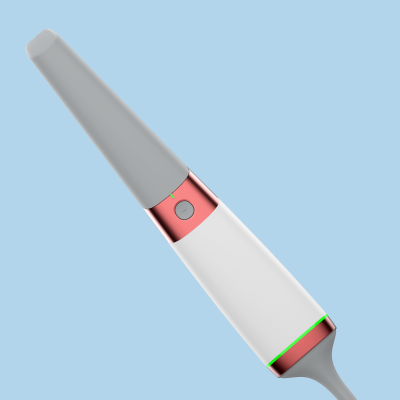
SHINING 3D Aoralscan Elite
Discover the SHINING 3D Aoralscan Elite, an innovative new intraoral scanner perfect for enhancing digital dentistry workflows.
)
SHINING 3D Aoralscan 3
Speed up your scanning with AI technology
If we look at in the aspects of implants or maxillofacial phase surgeries, you can take an intraoral scan of a patient, combine with a CT scan of the patient, and then plan the placement of an implant, which is something that you can't do when taking a dental impression.
How do intraoral scanners improve patient experience?
MA: From a patient perspective, intraoral scanners improve communication and treatment acceptance, and enable them to see their teeth from the dentist’s point of view, allowing them to have more input and understanding when planning future dental treatments. For example, if a patient wants their teeth straightened but you are using impression materials, how will they visualise the outcome? Intraoral scanners can resolve this, as they can simulate a lifelike end result of what the teeth could look like on the patient’s face.
Intraoral scanners are also more comfortable for the patient, and minimally invasive, whereas the use of impression materials can be unpleasant, particularly for patients with gag reflexes.
Also, for particularly health-conscious patients, intraoral scanners can demonstrate the effects of looking after their teeth. Patients with healthy teeth and gums may wish to explore cosmetic dentistry, which is a rapidly growing area of the industry.
)
Thrive With Cosmetic Dentistry
Cosmetic dentistry is more sought after than ever before. Is your dental practice keeping up with the demand?
How are intraoral scanners evolving, and how important are they for future-proofing your practice?
MA: Intraoral scanners are essential for future-proofing your practice. More and more dentists are heading down the digital route because of the high accuracy it offers, particularly when fitting a crown or making a mouthguard, for instance. The whole idea of an intraoral scanner is that you're able to scan the patient and send the work directly from your laptop or PC to the dental laboratory, without having to fill out any paperwork or sending it back by post, saving you valuable time.
When you take an impression of the patient, you could already have inaccuracies occurring from the very start. That dental impression is then converted into a positive and made into a stone model. If you've got any drag marks from removal or taking out the impression too soon, it will appear in the stone model, and there is a high that the dental laboratory is going to it back, which means you’d need to call the patient back in. You can eliminate all of this when you've already got a digital scan of the patient as well.
Intraoral scanners can be a costly, sometimes intimidating, purchase – what returns can dentists expect on their investment?
MA: Intraoral scanners are no longer as costly as they used to be. At Henry Schein, we supply a variety of intraoral scanners that are suitable for lower budgets. You don’t have to invest a huge amount of money on a scanner or a milling machine immediately: we offer scanners that are very accurate and extremely popular due to their low-end cost price. For example, the SHINING 3D Intraoral Wired Scanner is an excellent low-cost option and a great starting point for dentists that want to scan a full arch in under 30 seconds.
)
What’s The Next Big Thing?
Future-proof your dental practice by keeping up-to-date with the latest advancement in digital dentistry.

At Henry Schein, we offer tailored financial solutions for your equipment purchases. Let our expert team assist you in securing the ideal financing option for your dental practice.

Financial solutions for your equipment purchases
At Henry Schein, we offer tailored financial solutions for your equipment purchases. Let our expert team assist you in securing the ideal financing option for your dental practice.
Financial solutions for your equipment purchases
At Henry Schein, we offer tailored financial solutions for your equipment purchases. Let our expert team assist you in securing the ideal financing option for your dental practice.
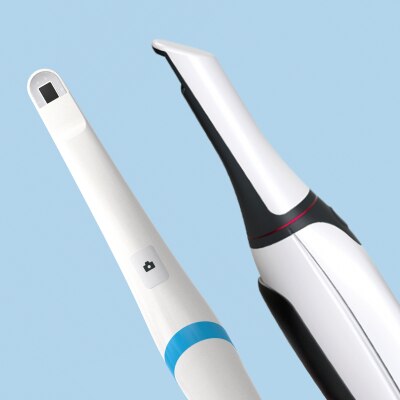)
Intraoral Technology
Intraoral cameras and scanners have moved beyond ‘nice to have’ and have become essential for any practice looking to stay ahead of the curve.
)
The Future of Dentistry
Industry expert John Maloney from GC discusses the key trends shaping dentistry between now and 2030 and the challenges facing the industry today.
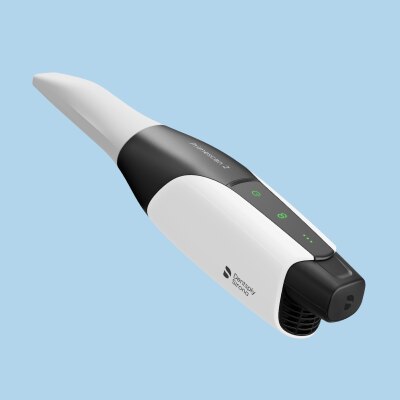)
Intraoral Scanners
Intraoral scanners are designed to improve patient experiences, streamline workflows, and enhance diagnostic precision.